8 Best LLM Tracking Tools in 2026
The best LLM tracking tool for brand teams in 2026 is SE Visible by SE Ranking, because it shows which sources shape each AI answer about your brand and how much search authority each one carries. For narrower jobs, Semrush AI Visibility Toolkit suits perception reports for Semrush users, Peec AI fits rival benchmarking on chosen engines, and Ahrefs Brand Radar sizes brand presence across a vast prompt index. Profound serves large brands needing SSO and wide coverage, and Otterly.AI gets a fixed prompt list running fast. All eight are compared below.
AI Overviews has over 2.5 billion monthly active users, and AI Mode passed 1 billion within a year. That makes AI answers widely read copy about your company, and nobody on your brand team approved it. On scope: LLM tracking here means tools that show how AI answers describe and cite a brand, not developer tools that trace prompts, tokens, and latency inside your own AI app.
How the 8 LLM tracking tools compare on brand signals
The table compares the eight tools on fit, brand signals, engines, and entry price.
| Tool | Best for | What it reports | Entry-plan engines | Entry price |
|---|---|---|---|---|
| SE Visible by SE Ranking | Brand reporting to leadership | Answer behind each score, net sentiment, citations | ChatGPT, Gemini, AI Mode, AI Overviews | Free trial; plans on visible.seranking.com |
| Semrush AI Visibility Toolkit | Teams reporting in Semrush | Share of voice, sentiment, narratives | ChatGPT, Google AI Mode | $99/mo; no trial |
| AthenaHQ | Perception plus content actions | Brand discussion, sentiment, sources | 5 on the free tier | Free; Starter $295/mo |
| Peec AI | Rival benchmarking | Visibility, position, sentiment, used vs cited sources | 3 you choose | $95/mo |
| Ahrefs Brand Radar | Sizing presence first | Mentions in 565M prompts, AI sources | 6 in the index | $199/mo (index) |
| Scrunch | Agent-ready site content | Citations, sentiment, funnel stage | ChatGPT, Perplexity, AI Overviews, Copilot | $250/mo |
| Profound | SSO and engine breadth | Daily answers, up to 10 engines (Enterprise) | 3 on the trial | 7-day trial; Enterprise custom |
| Otterly.AI | Fixed prompt list | AI search analytics, content audit | 3 of 7 below Enterprise | $29/mo |
Problem 1: the AI answer describes a brand you stopped being
Engines repeat old positioning, a retired tagline, or a stale comparison after you've moved on. A score that says "mentioned" hides that the description is wrong. The description is the brand now. LLM brand monitoring starts with reading the wording and logging each misdescription like a guideline violation: owner, cause, fix, recheck.
Problem 2: nobody can say where the wording came from
Every description traces back to a page. In an SE Visible study of US brand searches, 61% of AI Overview citations came from platforms the brand manages or can publish on, and 39% from sources outside its reach. Some corrections belong to content, others to PR. Without the source, you can't tell which.
Problem 3: one engine's answer gets read as what AI thinks
About half of U.S. adults now use AI chatbots: 44% use ChatGPT, 24% use Gemini. Buyers ask different assistants, and each can describe your brand differently by market. LLM visibility tracking means you track AI mentions across engines and markets before trusting one screenshot.
What a brand team should ask of an LLM tracking tool
Three tests, one per problem, separate LLM tracking tools: can you open the answer behind a number, see which sources shaped it, and compare engines and markets over time? AI visibility tracking tools that fail one leave you defending a score you can't explain.
- Each score opens to its answer, with the date.
- Sentiment names its subject: pricing, support, category fit.
- Sources are cited per answer.
- Results split by engine, country, or city.
- Exports, connectors, and view-only seats feed leadership reports.
The tools below are grouped by problem, from each vendor's live pages.
Read the description behind the score: SE Visible, Semrush AI Visibility Toolkit, and AthenaHQ
For an outdated description, these three put the wording and sentiment of each answer in front of you.
1. SE Visible: best LLM tracking tool
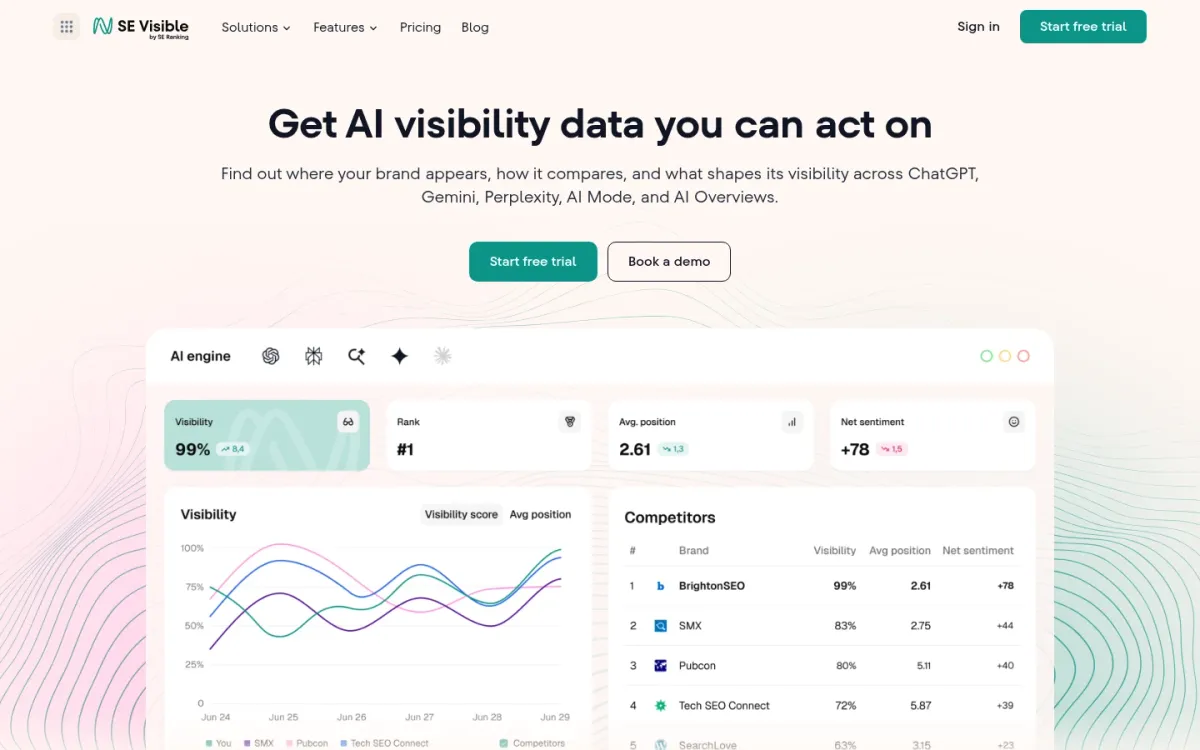
Brand leaders who report what ChatGPT and Gemini say about the company to the executive team should read this pick first.
SE Visible by SE Ranking is an AI visibility platform that reads each answer about your brand through the search data behind the sources it cites. Tracking runs daily by default (adjustable) across ChatGPT, Gemini, Google AI Mode, and Google AI Overviews, and each visibility, share of voice, or net sentiment figure opens into the unedited answer. In Citations, the Domains report gives each cited domain's traffic, Domain Trust, backlinks, and referring domains. The URLs report adds page traffic and whether the page links to you, so you can judge which sources carry weight before content or PR acts.
Best for: brand and marketing leaders at mid-market and enterprise companies who own LLM brand visibility.
Standout feature: On the brand visibility dashboard, prompts are labeled branded or non-branded; the Exclude branded prompts toggle keeps branded ones from inflating the score.
Pros:
- Splits Net sentiment (-100 to +100) into positive, negative, and neutral answers
- Reads each market apart: a country, or a city or region
- Adds unlimited seats with view or edit rights, Looker Studio, and CSV export
Cons:
- Why sentiment moved is yours to judge; tracing its prompts and sources is on the roadmap
- Site audits and keyword research belong in SE Ranking
Pricing: Plans are on visible.seranking.com, each with every tracked engine and API access included; a free trial is available.
Brand read: Pick SE Visible when leadership asks which sources shape the AI description of your brand: you can show each one's search authority and assign the fix with evidence. Behind it is the SE Ranking team, with over a decade of search work.
2. Semrush AI Visibility Toolkit
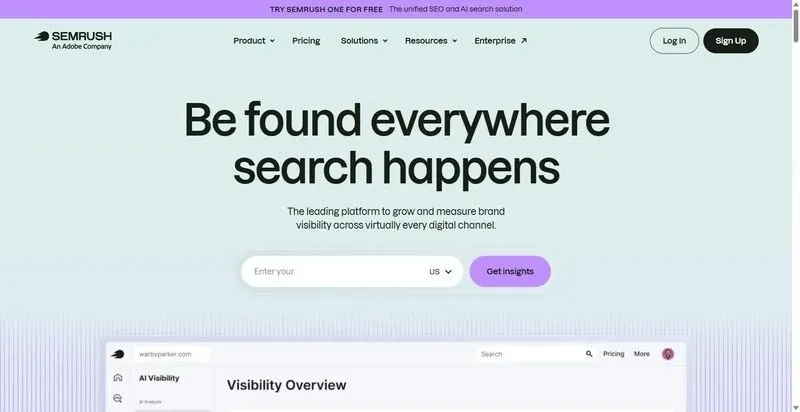
Semrush's Brand Performance report reads like a press summary of how two AI engines describe you.
Best for: brand teams whose search reporting already runs in Semrush.
Standout feature: Brand Performance runs queries through ChatGPT and Google's AI Mode, reporting share of voice, sentiment, and "the key narratives driving your reputation." It also assesses the tone and attributes the answers use.
Pros:
- Sizes buyer questions in Prompt Research first
- Tracks 25 prompts
- Checks up to 100 pages for AI search issues in Site Audit
Cons:
- Its documentation names ChatGPT and Google AI Mode, not Gemini
- Allows one Brand Performance domain and charges per seat
Pricing: $99/month; extra domain or location $99, extra prompts $60/month; no free trial.
Brand read: Narrative and tone sit beside the search data your team trusts, which makes the wording easy to bring into an existing report. Check the engine list against your buyers' markets first.
3. AthenaHQ
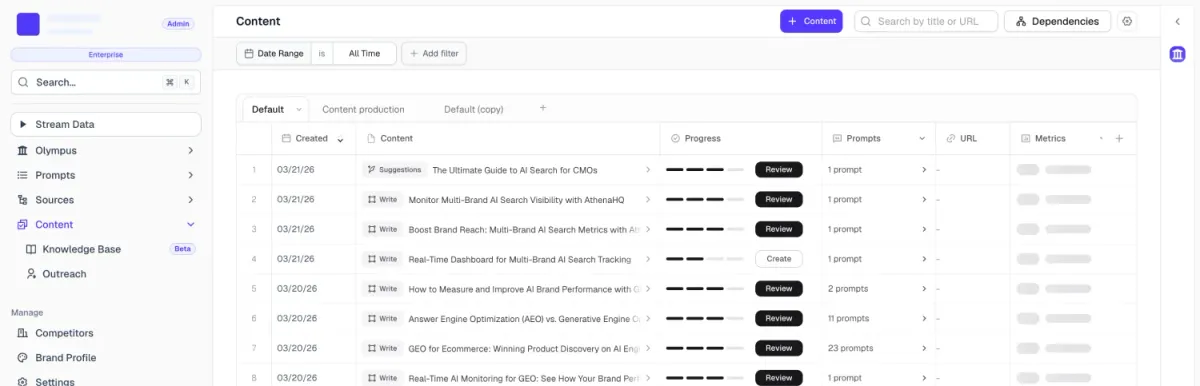
AthenaHQ pairs brand perception tracking with Ask Athena, a copilot for acting on what it finds.
Best for: enterprise marketing teams that want perception tracking and content actions in one account.
Standout feature: Cross-platform sentiment sits beside citation source analysis. The content optimization agent and Ask Athena, which answers from your account's tracking data, turn a wrong description into content work.
Pros:
- Starts free: Essential gives 300 credits on ChatGPT, Perplexity, AI Overviews, Gemini, and Copilot
- Starter covers 11 models, Claude and AI Mode among them
- Compares share of voice with unlimited competitors
Cons:
- One credit per collected answer: prompt count sets how far 3,600 credits go
- Starter charges separately for API access and extra credits
Pricing: Essential free; Starter $295/month (3,600 credits); Enterprise custom.
Brand read: AthenaHQ handles reading and rewriting; keep a positioning owner between the agent's suggestion and the live page, so the rewrite still sounds like the brand.
Trace the wording to its source: Peec AI, Ahrefs Brand Radar, and Scrunch
For untraced wording, these LLM tracking tools show which pages and platforms feed each answer, content fix or PR fix.
4. Peec AI
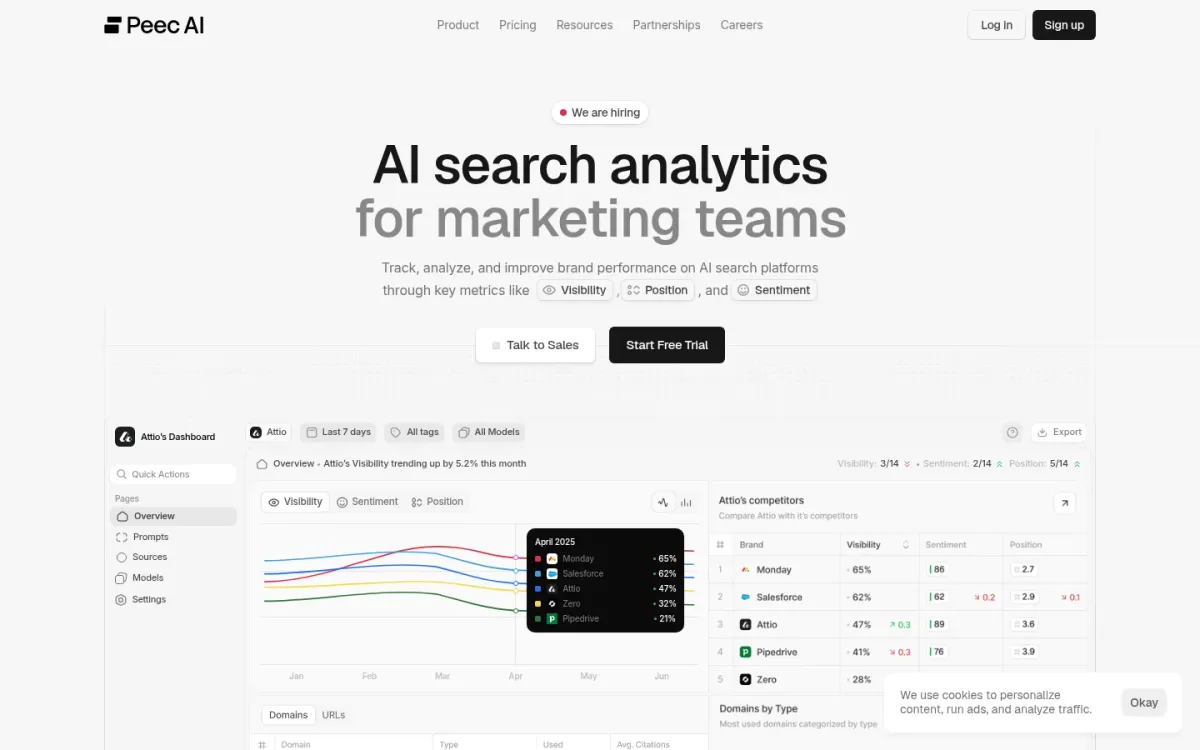
Peec AI separates sources that quietly shaped an answer from sources the answer shows.
Best for: brand and marketing teams benchmarking named rivals on three engines they pick.
Standout feature: As an LLM visibility tracker, Peec AI marks a source "used" when a page informed the answer and "cited" when the answer names its URL, by domain or URL with citation frequency.
Pros:
- Includes unlimited team users
- Reports Visibility, Position, and Sentiment daily, so a rival's gain shows the next day
- Offers fact-checked prompts
Cons:
- Charges extra for models beyond three on self-serve
- Leaves API off Starter, which covers one country
Pricing: Starter $95/mo (50 prompts), Pro $245/mo, Advanced $495/mo, Enterprise custom; free trial offered.
Brand read: Peec AI's strength is the sources an answer uses but never credits. Three included engines suit a rival benchmark. Auditing every engine you report on needs more: Enterprise tracks up to 26 models.
5. Ahrefs Brand Radar
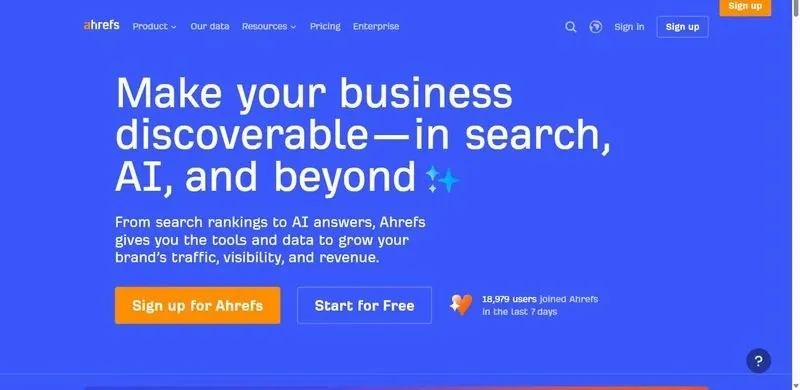
Ahrefs Brand Radar measures your brand against 565 million prompts.
Best for: teams sizing brand presence across a large index before they choose prompts to track.
Standout feature: The AI Visibility Index spans AI Overviews, AI Mode, ChatGPT, Perplexity, Gemini, and Copilot. AI Sources adds YouTube, TikTok, and Reddit, free while in beta, so a phrase born in a thread gets a named source.
Pros:
- Extends Custom Prompts to Claude
- Reports AI traffic and bot visits
- Includes a small Custom Prompts quota on paid Ahrefs plans (5 prompts on Lite)
Cons:
- Its own page says the index "may have limited coverage for brands with little or no search volume"
- Splits cost across index, custom prompts, and $0.020 per-check overage
Pricing: $199/mo for the index; Custom Prompts from $50/mo ($699/mo all models).
Brand read: Size the gap here before committing to prompts; a niche brand with little search demand may find the index thin.
6. Scrunch
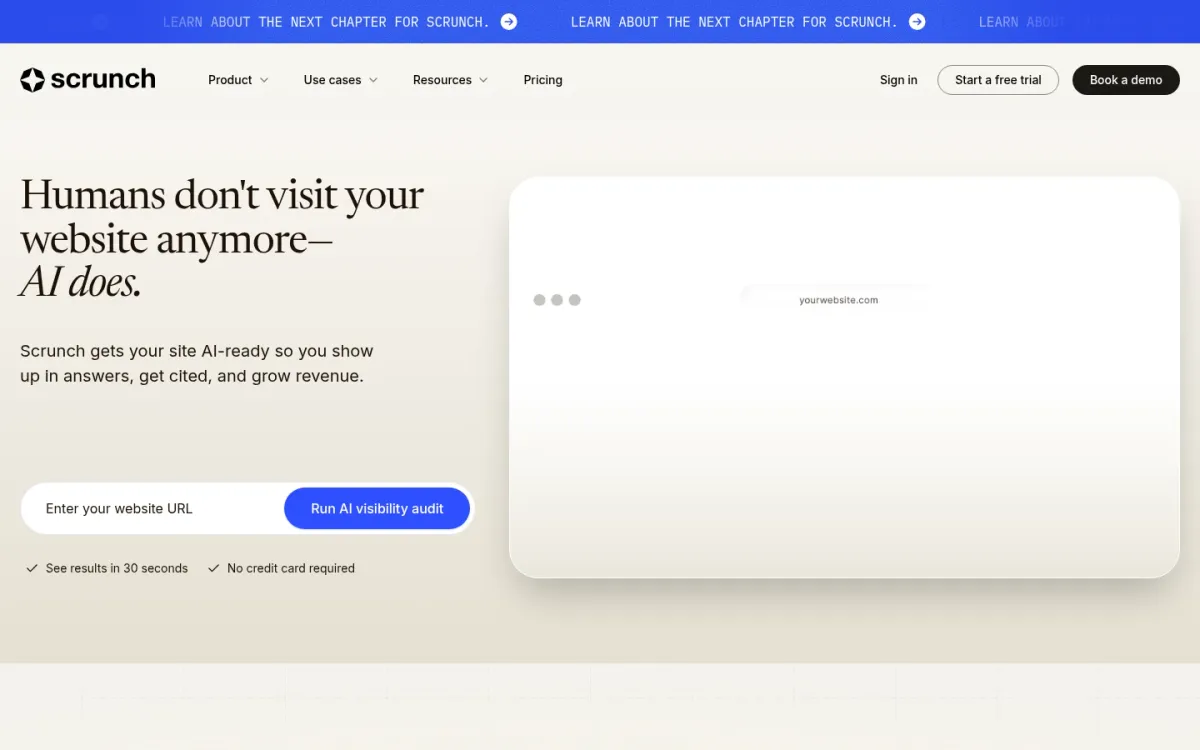
Scrunch sorts citations and sentiment by funnel stage, so you see where in the buying journey a description lands.
Best for: marketing teams that also want to shape how AI agents read their site.
Standout feature: Scrunch adds bot traffic and page-level optimizations to citation tracking. When the source behind the wording is your own page, the fix stays with your web team. Enterprise widens coverage to nine LLMs, Meta AI among them, and adds AXP (Agent Experience Platform).
Pros:
- Includes 125 prompts and 5 users on Core
- Runs site audits beside monitoring
- Offers a 7-day free trial
Cons:
- Keeps Gemini, AI Mode, and Claude on Enterprise
- Leaves API and Looker Studio off Core
Pricing: Core $250/mo (1 country); Enterprise custom.
Brand read: Worth it when the stale description starts on your own site: one account tracks the wording and audits the page behind it. For multi-market brands, Core's single country is tight.
Compare engines and markets before you call it a pattern: Profound and Otterly.AI
To keep one engine from speaking for AI, these LLM tracking tools either cover a long engine list or hold one fixed engine set.
7. Profound
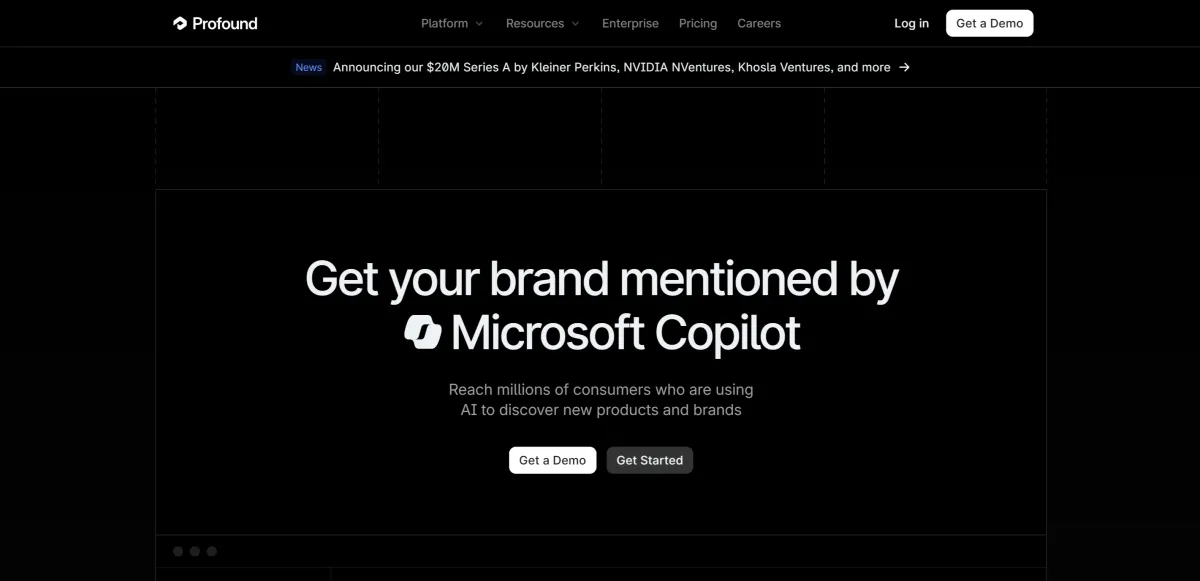
Profound carries a long engine list, so each description gets checked engine by engine.
Best for: large organizations whose security review requires SSO.
Standout feature: Enterprise tracks up to 10 answer engines daily, from ChatGPT, Gemini, Claude, and both Google AI surfaces to DeepSeek, Exa Search, Muse Spark, and Qwen. When one engine calls you "conservative" and nine don't, that's an outlier.
Pros:
- Keeps all-time history, CSV and JSON exports, and API access on Enterprise
- Adds SSO/SAML with SOC 2 compliance and the credit-based AI Marketer
Cons:
- Trial users get an industry prompt set and "cannot customize their prompts"; custom prompts are documented on Enterprise
- The trial has no history, exports, or API
Pricing: Free 7-day trial (50 prompts daily on ChatGPT, Gemini, and AI Overviews); Enterprise custom.
Brand read: Profound fits when engine breadth is leadership's question. Treat the 7-day trial as a preview of the interface.
8. Otterly.AI
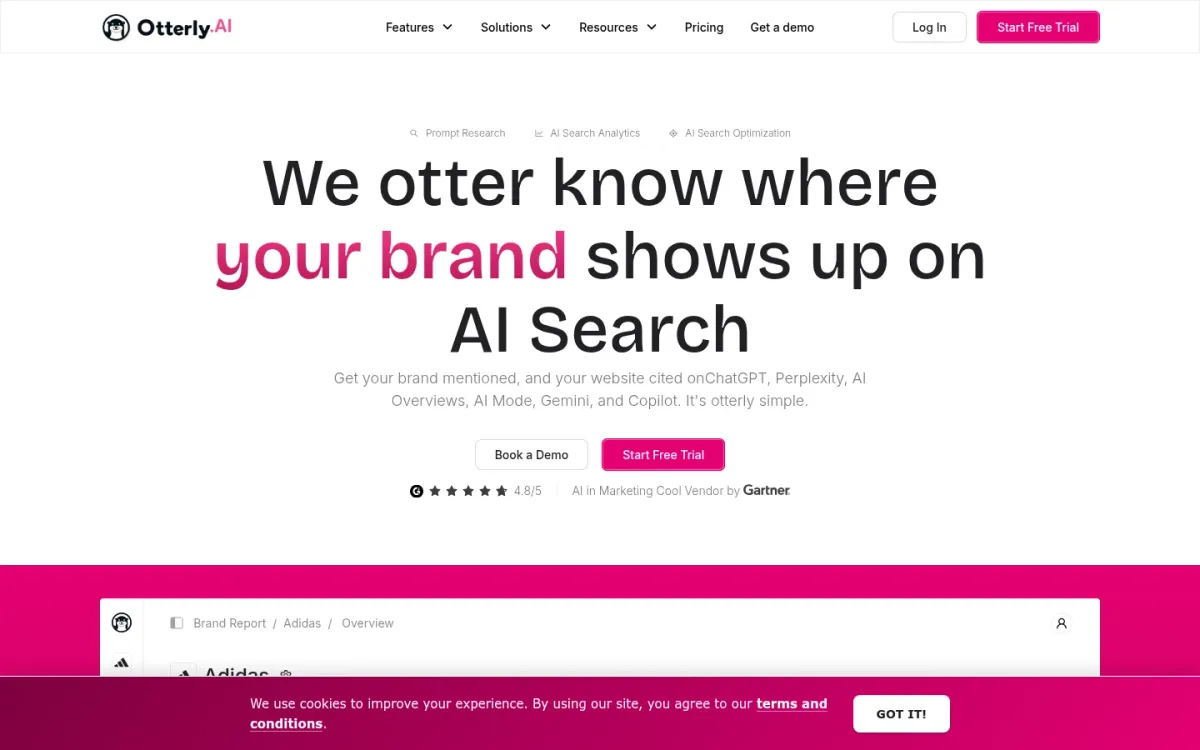
Otterly.AI has you pick three of seven engines per self-serve plan, which keeps a first comparison narrow and steady.
Best for: brand teams opening a first monitoring program on a short, fixed prompt list.
Standout feature: The seven engines are ChatGPT, AI Overviews, AI Mode, Gemini, Claude, Perplexity, and Copilot. The same three engines and prompts each month turn this LLM visibility checker into a stable baseline.
Pros:
- Opens with a 7-day free trial for new users
- Scales to Enterprise from 1,000 prompts when the pilot list grows
Cons:
- Self-serve plans stop at 3 of 7 engines; all seven need Enterprise
- Lite leaves out API and MCP
Pricing: Lite $29/mo (20 prompts), Standard $189/mo (160 prompts), Premium $489/mo (535 prompts), Enterprise custom.
Brand read: Otterly.AI is a disciplined start: fixed list, fixed engines, the same read monthly. Pick the engines your buyers use before trusting the trend; switching them later breaks the comparison.
Which LLM tracking tool belongs in your brand-health read
If you must read and defend what AI answers say about the brand, start with SE Visible. Add a narrower pick only for a named gap: Semrush-centric reporting, SSO with wide engine coverage, or a fixed-list pilot. Try SE Visible on your next brand review. SE Ranking covers the SEO side; together, the two give a fuller picture of your brand in search.
Skip if: you need Google AI Mode or Gemini answers without an Enterprise contract: Scrunch Core does not cover them.
Whichever AI brand monitoring tools you pick, each misdescription needs an owner and a recheck date.
LLM tracking tools: frequently asked questions
What is an LLM tracking tool?
An LLM tracking tool puts fixed buyer questions to AI engines on a schedule and stores the replies about your brand. A typical LLM tracking tool covers ChatGPT, Gemini, Google AI Mode, and AI Overviews; reports cover mentions, wording, sentiment, sources, and rivals.
How do you audit brand visibility on LLMs?
Run one set of category and brand prompts across your buyers' engines and markets. Read the answers as a description review, not a rank report. Log each misdescription and correct it at the source.
Why track AI brand visibility?
Buyers read AI answers about your company before they reach your site, and a wrong description can cost a shortlist. LLM visibility tracking over months separates a repeated characterization from one odd answer.